The Importance of An Accurate Signal Recognitions System in Hypnosis
There are signs and signals that surround all of us everyday. Some of those signals come from people and others come from objects. T here are signals that are concrete. These signals tell us when it is okay to cross the street, when to eat and when we should be sleepy.
There are also signals all around us that are not as obvious; an innocent flirtation, needs and feelings within others they need met and the signals of trance. It is true there are people around you everyday falling in and out of trances. Many times people do not realize the signals that are coming from those in trance.
At the beginning of hypnosis it is vital that you learn to recognize these signals. But before you can easily spot signals coming from others you must first teach yourself a few things.
You need to learn to see the world as it is. Plain and simple. Most people view the world as they want it to be. If you can learn to view things as they actually are you will be opening your mind to the truth of the world. When we see things the way in which we believe, or want to believe, things are we are deceiving ourselves.
As humans we are accustomed to seeing what we expect. We filter out what we don’t want and view the world, our lives and the lives of others in skewed terms. In order to see things as they truly are there are two things you must do for yourself.
The first is to recognize what is actually out there, whether you are viewing the world or your front yard. Keep your view simple and true, factual.
The second thing you need to do is to learn to recognize the signals that come when you are successful in a thing. Look for the signals that tell you are being successful in whatever it is that you are doing.
After you have learned to open your mind and do these two things successfully on a consistent basis you will be able to attune your ‘accurate signal recognition’ even further.
Milton Erickson was practiced and precise in his accurate signal recognition. Erickson was a leading psychiatrist, born in the early 1900’s. He specialized in medical hypnosis and family therapy. Erickson believed as many hypnotists do today that the unconscious was completely separate from the conscious. This included that the unconscious mind possessed its own awareness, interests, responses and learning abilities.
Milton Erickson was so precise in his recognition of signals that he could tell things about a person that they perhaps had only discovered moments earlier. He used his keen sense of signal recognition as he closely watched people and noticed things others would never see.
Erickson could tell a woman was expecting a child in the first weeks of pregnancy just by the tilt of her hips and movement of her hairline. When a woman is pregnant these things change in very small ways. The hair line moves by fractions, so little unless you were keen to the idea you would never notice. There are also changes within the body that affect the pelvis and its structure.
Erickson’s ability to read signals was so attuned he could read signals from subjects that other doctors never even realized. Once a woman visited him and was very skeptical about seeing yet another psychiatrist because no other psychiatrist had recognized her dilemma as of yet. Erickson told her immediately that he needed to know how long she had been a woman for.
He could tell simply from the signals she was sending out that she was really a man. Her body language was that of a girls who had not yet figured out how to work around new breasts. She would bump them as she moved her arms and gestured with her hands. Many people would just attribute this small signal as something that happens when one is not comfortable in their body. Or many may not have even noticed it at all, depending on the size of her chest I am sure.
Milton Erickson was noted for his signal recognition and it was fundamental in his success as a hypnotist. He knew, as you need to know now, that the smallest signals a person gives off can send a large amount of information your way.
Noticing changes in your subjects and the people around you is an important skill to perfect. Acute visual recognition can show you changes in the smallest detail. These changes and details are very important.
As you learn more about hypnosis and signal recognition systems it is important to focus on and develop them for yourself. This will aid you greatly in seeing the signals that someone is entering trance. It will also help in showing you when people are responding to your ideas and suggestions in the ways you want them to.
Signal recognition systems are a key tool in hypnosis. They can tell you volumes about a person once you learn to recognize and read the signals properly.
After all it is always good to know when a woman is actually a man, and if signal recognition can help you here it can more than likely help you any where.
For more information please visit Power Of Hypnosis
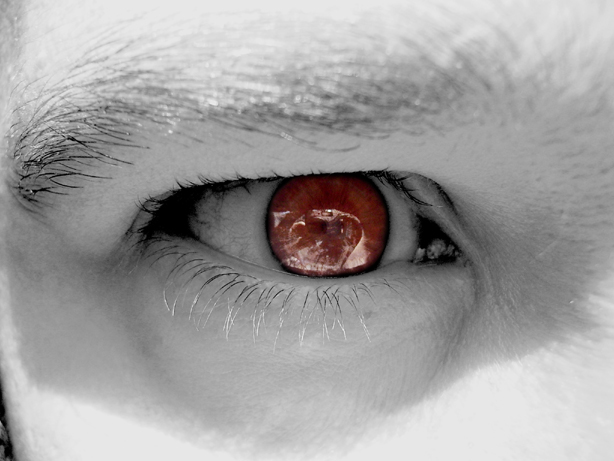 Hypnotism can be traced back more than 4,000 years ago to ancient Egypt. The ancient Egyptians used sleep or dream temples where ill citizens were healed. These people were put into a trance-like condition. Priests would use various forms of chanting to induce them into such a state. Healing would happen while the ill person was in that trance like state. The priests used the power of suggestion to help the sick people obtain a cure for their illness.Today, hypnosis is being utilised in a lot of self-improvement categories like weight loss and stop-smoking programs. It has also been used to control certain habits like bed-wetting and thumb-sucking in younger sufferers. Hypnotism is fast starting to become popular as it doesn’t entail medicines and has no serious side effects.